Business Setup
Cosmetic Product Registration in UAE: Requirements, Process & Common Mistakes
The United Arab Emirates offers significant opportunities for beauty brands, cosmetic manufacturers and businesses planning to introduce personal care products to the market. However, importing or selling cosmetics involves more than obtaining a trade licence and arranging product shipments.
Businesses must also understand the product registration, safety and labeling requirements that apply to their products.
For companies entering the Dubai market, Dubai Municipality's Montaji system plays an important role in the registration and assessment of consumer products.
Understanding cosmetic product registration in UAE can help businesses prepare their documentation, identify regulatory requirements and avoid unnecessary delays before launching their products.
This guide explains the registration process, commonly required documents, labeling considerations and mistakes businesses should avoid.
What Is Cosmetic Product Registration in the UAE?
Cosmetic product registration is a regulatory process used to assess whether products meet applicable requirements before they are placed on the market.
The process may involve reviewing product information, ingredients, labeling, supporting certificates and other technical documentation.
Products covered by cosmetic and personal care requirements can include skincare preparations, makeup, shampoos, conditioners, perfumes and certain other beauty products.
The applicable requirements depend on the product's classification, ingredients, intended use and the market where it will be sold.
For businesses operating in Dubai, Dubai Municipality provides consumer product registration services through Montaji.
Companies should also determine whether federal conformity requirements or additional approvals apply to their products.
Why Is Cosmetic Product Registration Important?
Product registration helps regulatory authorities assess consumer products against relevant safety and compliance requirements.
For businesses, preparing the registration correctly can also reduce operational complications.
Supporting Consumer Safety
Cosmetic products come into contact with the skin, hair or other parts of the body.
Regulatory assessment helps identify products that may not meet applicable safety or technical requirements.
Reducing Import and Distribution Problems
Incomplete product documentation or missing approvals can create difficulties when businesses attempt to import or distribute regulated goods. Addressing registration requirements before shipment planning can help prevent avoidable disruptions.
Building a More Reliable Market Entry Plan
Businesses that understand their regulatory obligations can plan packaging, inventory, distribution and product launches more effectively.
Registration is therefore an important part of a broader compliance strategy, not simply an administrative formality.
Which Cosmetic Products May Require Registration?
A wide range of beauty and personal care products can fall within cosmetic registration requirements.
Examples include:
- Facial cleansers, moisturizers and skincare creams.
- Foundations, lipsticks and other makeup products.
- Shampoos, conditioners and hair styling preparations.
- Perfumes, deodorants and fragrance products.
- Body lotions and personal cleansing products.
- Nail care and certain beauty treatment preparations.
These examples are general categories rather than a complete regulatory classification list.
A product marketed as a cosmetic may require a different regulatory pathway if its ingredients, intended purpose or claims place it in another category.
Businesses should confirm the correct classification before submitting an application.
Dubai Municipality and the Montaji Registration System
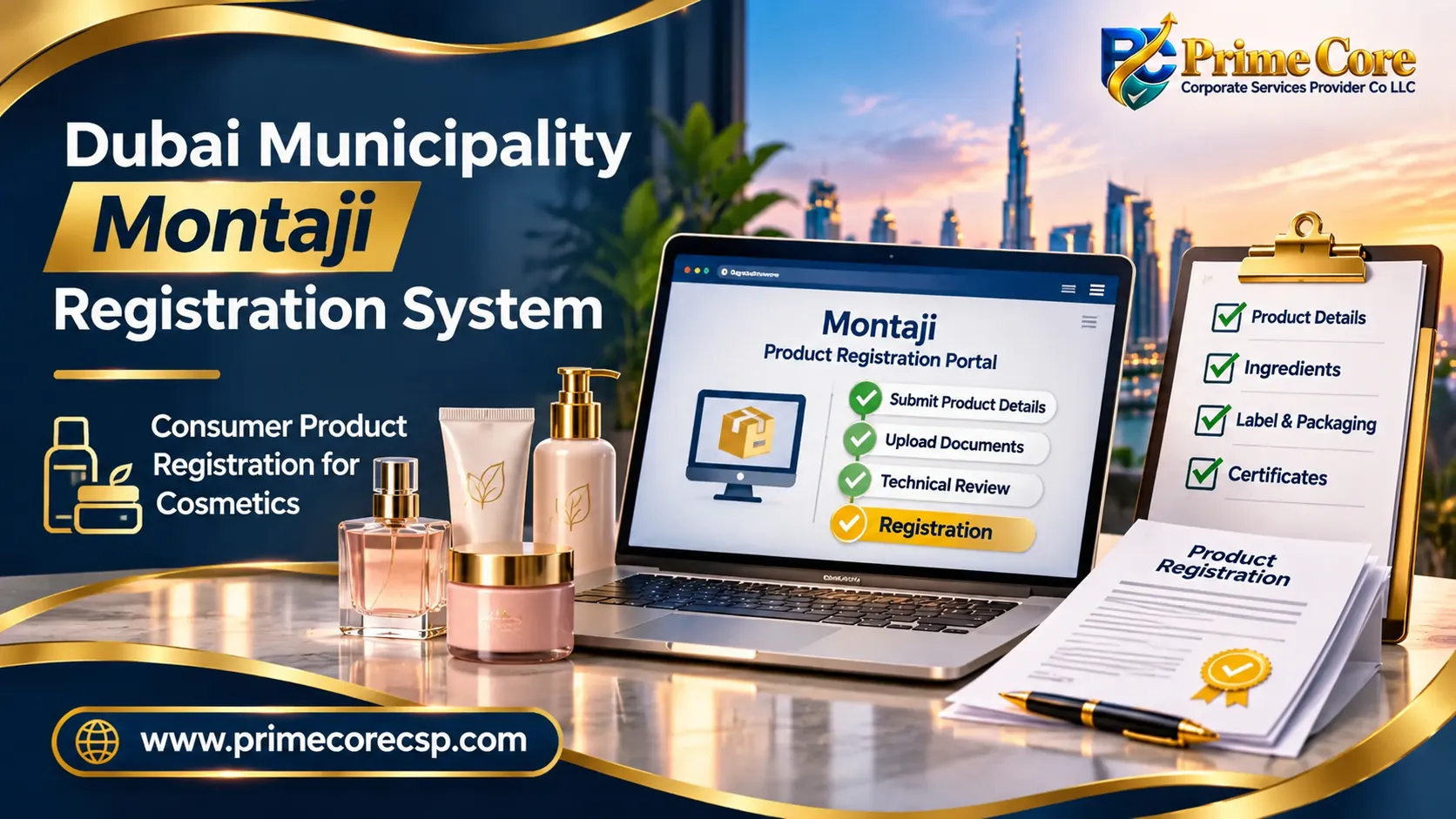
Dubai Municipality operates Montaji as a digital platform for registering and assessing consumer products, including cosmetics and personal care products.
The platform supports the submission and review of product information and related documentation.
For businesses preparing to sell cosmetic products in Dubai, the first step is to confirm the appropriate registration pathway and the eligibility of the company submitting the application.
The company should hold the relevant business activity and meet the applicable account and registration requirements.
It is also important to distinguish Dubai Municipality registration from other requirements that may apply elsewhere in the UAE.
A registration route used in Dubai should not automatically be assumed to satisfy every regulatory obligation in another emirate.
For official information, businesses can consult the Dubai Municipality Services Portal.
Documents Required for Cosmetic Product Registration
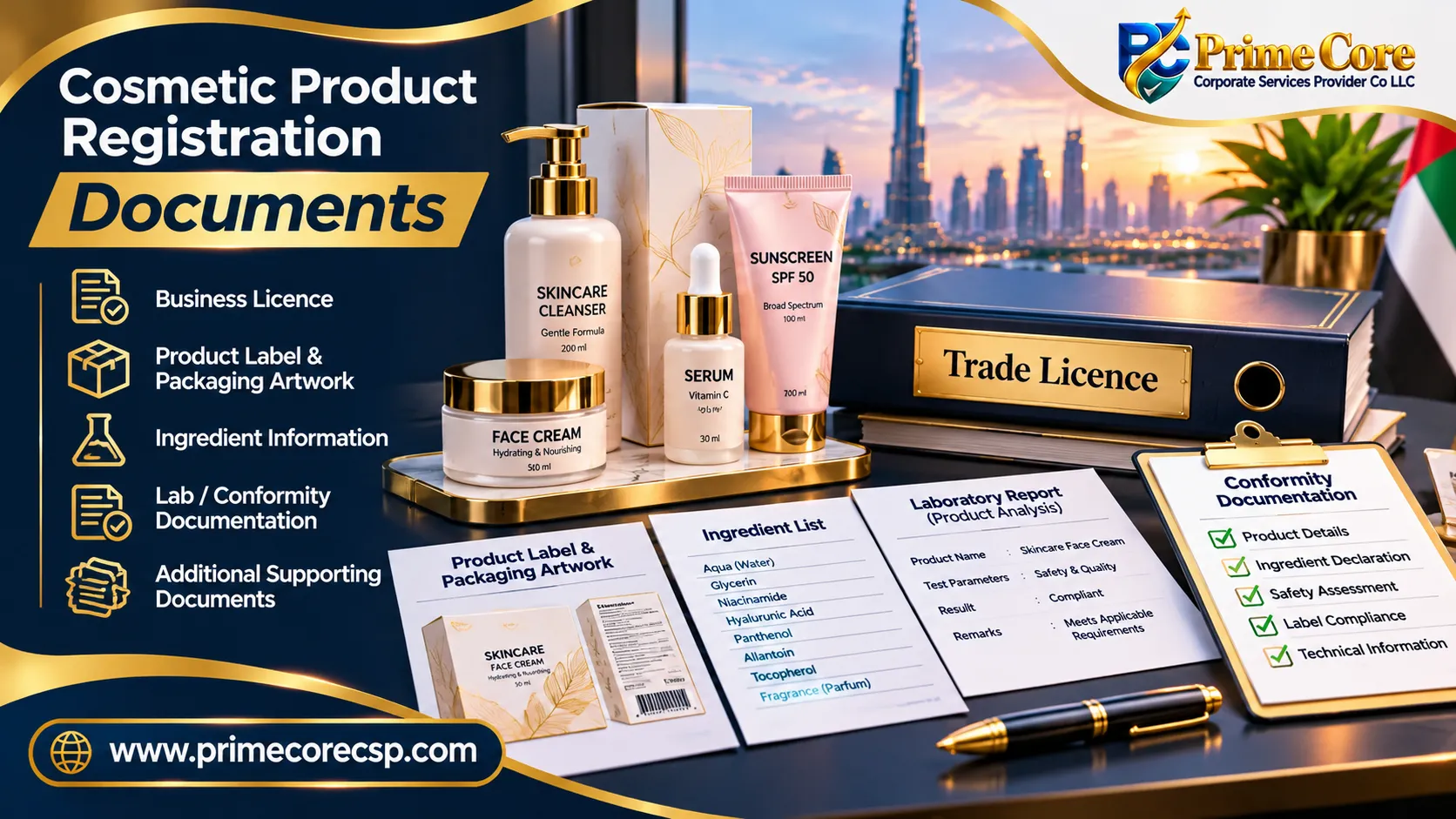
Documentation requirements can vary according to the product, registration pathway and reviewing authority.
For Dubai Municipality's consumer product registration process, businesses should prepare to review the following information.
1. Valid Business Licence
The applicant may need a valid trade licence covering the relevant cosmetic or consumer product activity.
The licence details should correspond to the company submitting the registration.
2. Product Label and Packaging Artwork
Clear images or artwork showing the product's packaging help the reviewing authority assess the information presented to consumers.
Businesses should prepare readable images of the relevant sides of the packaging.
3. Product Composition and Ingredient Information
Technical documentation may be required to explain the product's composition and ingredient concentrations.
The information should be consistent with the formulation supplied by the manufacturer.
4. Supporting Conformity or Laboratory Documentation
Depending on the applicable requirements, the submission may involve a relevant conformity certificate, manufacturer-issued composition report or laboratory test report.
Additional technical or safety evidence may be requested during the assessment.
5. Additional Documents When Applicable
Some products may require further supporting information because of their ingredients, claims or specific regulatory category.
Businesses should confirm the exact checklist with the relevant authority rather than assuming every cosmetic product requires identical documents.
Step-by-Step Cosmetic Product Registration Process in Dubai
Although requirements can differ by product, the following sequence provides a practical overview of how businesses can prepare for registration through the relevant Dubai Municipality service.
Step 1: Confirm Product Classification
Identify whether the product is a cosmetic, personal care preparation, fragrance or another regulated category.
Review its intended use, ingredients and marketing claims.
Correct classification helps determine which regulatory requirements apply.
Step 2: Review Company Eligibility
Confirm that the business has an appropriate trade licence and can access the relevant registration service.
If a company is working with a local importer or authorized representative, clarify the applicant's responsibilities before proceeding.
Step 3: Prepare the Product Documentation
Collect packaging artwork, product details, ingredient information and the applicable technical certificates or reports.
Check that the product name, brand, manufacturer and formulation details are consistent across the documents.
Step 4: Submit the Application
Enter the required information through the applicable Dubai Municipality registration service and upload the supporting documents.
Follow the portal's current submission and payment instructions.
Step 5: Respond to Assessment Requests
The reviewing authority may request corrections, clarification or additional supporting documents.
Respond with accurate information and updated files where required.
Step 6: Confirm Registration Before Market Launch
Once the applicable registration process is completed, retain the relevant confirmation and product records.
Verify any additional import, conformity or distribution obligations before placing the product on the market.
Cosmetic Product Labeling Requirements in the UAE
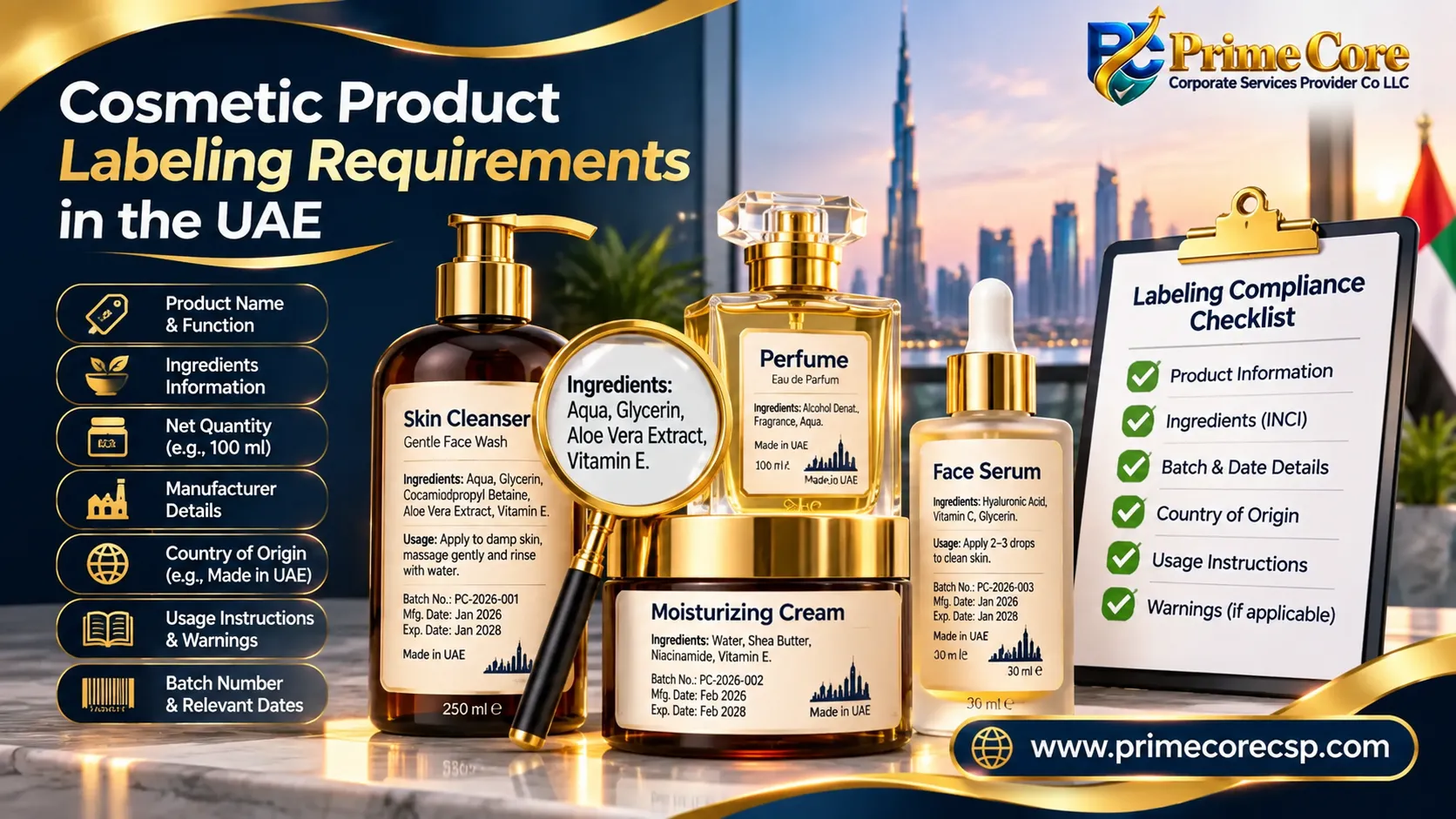
Product labeling is an important part of cosmetic compliance.
Authorities may review packaging to determine whether the information presented to consumers meets the relevant requirements.
Depending on the product and applicable standards, labeling information may include:
- Product name and intended function.
- Ingredient information.
- Net quantity or content.
- Manufacturer or responsible business details.
- Country of origin.
- Batch identification.
- Relevant dates, warnings and usage instructions.
Language, formatting and other labeling requirements should be checked against the standards applicable to the product.
Businesses should not assume that packaging designed for another country will automatically meet UAE requirements.
Before printing large quantities of labels, review the artwork against the current regulatory checklist.
Common Cosmetic Product Registration Mistakes
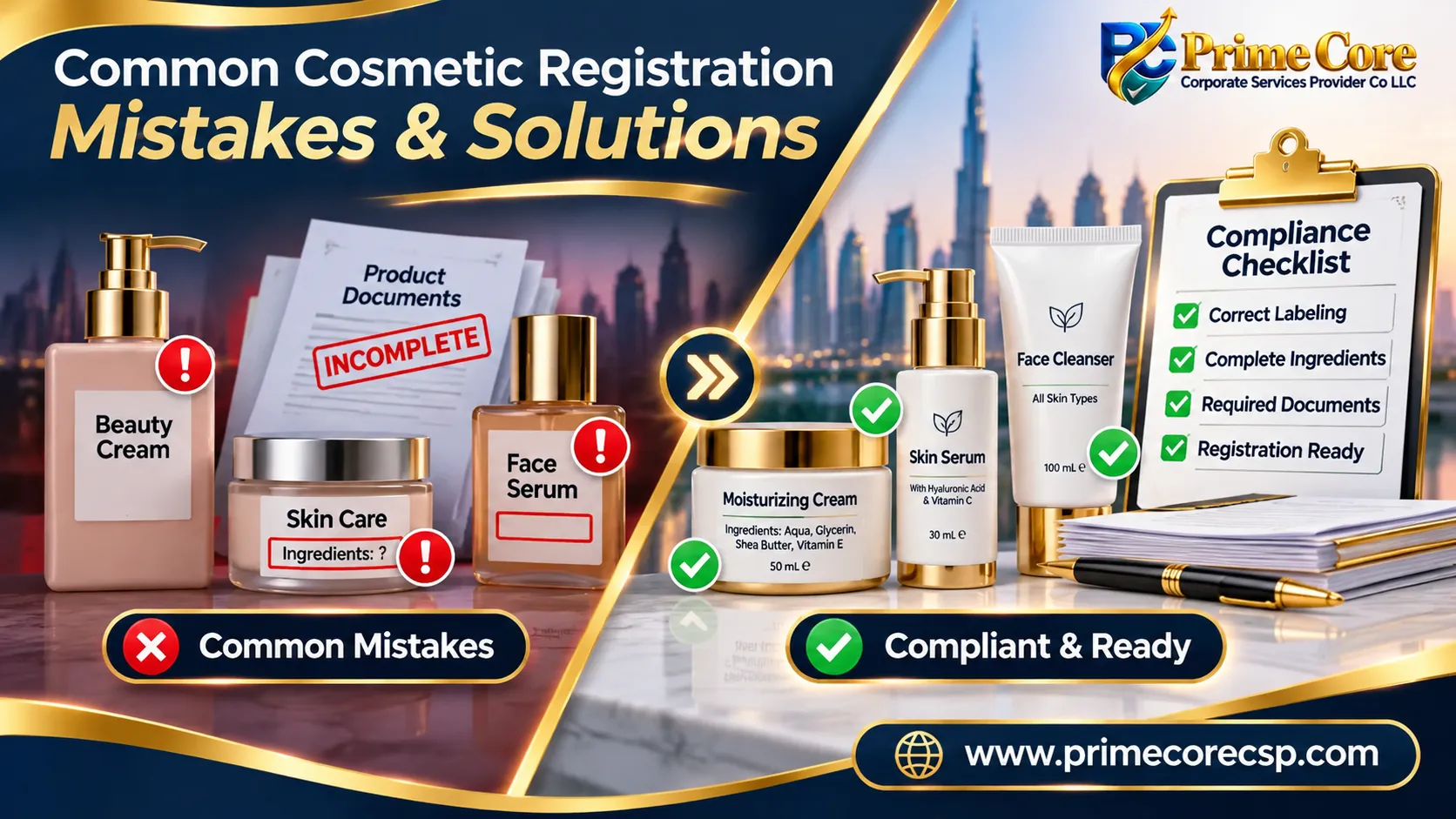
Registration problems often arise when businesses begin the process without reviewing their documents and product information carefully.
Here are six mistakes worth avoiding.
1. Applying Under the Wrong Product Category
A product may be described as a cosmetic in marketing materials but require a different regulatory assessment because of its intended use or claims.
How to avoid it: Confirm the correct classification before preparing the registration file.
2. Using Incomplete Ingredient Information
Missing ingredient details or inconsistent formulation records can create questions during technical assessment.
How to avoid it: Obtain accurate composition information from the manufacturer and review it before submission.
3. Submitting Packaging With Missing Information
Labels that do not contain the required details may need to be corrected.
How to avoid it: Check packaging artwork against applicable labeling requirements before printing or uploading it.
4. Ignoring Additional Product Approvals
Some businesses assume that a trade licence alone is sufficient to begin selling regulated cosmetic products.
How to avoid it: Identify the product registration, conformity and import requirements relevant to the specific product.
5. Providing Inconsistent Product Details
Differences between product names, packaging, manufacturer records and supporting documents may result in requests for clarification.
How to avoid it: Use a consistent product identification system across the registration file.
6. Planning Sales Before Completing Compliance Checks
Businesses sometimes arrange inventory, advertising or distribution before confirming the required regulatory steps.
How to avoid it: Include product compliance milestones in the launch plan and confirm the necessary approvals before market entry.
How Long Does Cosmetic Product Registration Take?
There is no single processing timeline that should be assumed for every cosmetic product registration application.
The duration can depend on the reviewing authority, product classification, completeness of the documents and whether further technical assessment is required.
Applications involving additional testing or corrections may take longer than submissions with complete and consistent documentation.
Businesses should check the current service information and processing expectations directly with the relevant authority.
Avoid making fixed launch commitments until the necessary approvals have been confirmed.
Can You Register Imported Cosmetic Products in Dubai?
Imported cosmetics can be subject to the same market-entry compliance considerations as products manufactured locally.
However, the applicant may need to coordinate with the manufacturer, importer or authorized representative to obtain the necessary documentation.
For example, a skincare brand manufacturing products outside the UAE may need to provide packaging information, ingredient details and technical evidence for assessment.
The company should also confirm the applicable importer and customs requirements before arranging commercial shipments.
A valid trade licence does not automatically replace product-specific registration or conformity obligations.
Cosmetic Registration Checklist Before Launching Your Brand
Before introducing cosmetic products to the market, review the following:
- Business activity: Confirm that your trade licence supports the intended commercial operations.
- Product classification: Identify the correct regulatory category.
- Company eligibility: Confirm who can submit the application.
- Product documentation: Collect the required technical and supporting records.
- Packaging: Review labels and product artwork for compliance.
- Registration: Complete the applicable product assessment process.
- Import requirements: Check any additional conformity or shipment-related obligations.
- Recordkeeping: Maintain accurate product information and approval records.
Completing these checks early can help businesses approach market entry with fewer avoidable complications.
Frequently Asked Questions
Is cosmetic product registration required before selling in Dubai?
Cosmetic and personal care products covered by Dubai Municipality's registration requirements generally need to complete the applicable process before being placed on the Dubai market.
What is Montaji in Dubai?
Montaji is Dubai Municipality's digital system used for consumer product registration and related product information services.
Can a foreign cosmetic brand register products in the UAE?
Foreign brands may enter the UAE market through an eligible local business, importer or authorized representative, depending on the applicable registration pathway and regulatory requirements.
Does a UAE trade licence automatically approve cosmetic products?
No. A trade licence authorizes specified business activities but does not automatically replace product registration, conformity assessment or other product-specific approvals.
Are cosmetic registration requirements identical across all UAE emirates?
Not necessarily. Requirements and administrative processes may differ by jurisdiction, product category and responsible authority.
Can incorrect labeling delay cosmetic product approval?
Yes. Missing, inconsistent or non-compliant packaging information may lead to requests for corrections or additional clarification.
Launch Your Cosmetic Products in the UAE With PrimeCore CSP
Entering the UAE beauty and personal care market requires careful planning, accurate documentation and an understanding of the relevant regulatory processes.
From confirming product categories to preparing registration documents, businesses can benefit from addressing compliance requirements before their products reach the market.
PrimeCore CSP supports businesses with company formation, product registration and related corporate services in the UAE.
Explore our Business Setup Services or Contact PrimeCore CSP to discuss your cosmetic product registration requirements.
Disclaimer: This article provides general information and does not replace official regulatory guidance. Cosmetic product classification, registration, conformity assessment, labeling and import requirements may vary by product and jurisdiction. Confirm the latest requirements with the relevant UAE authorities before making commercial decisions.